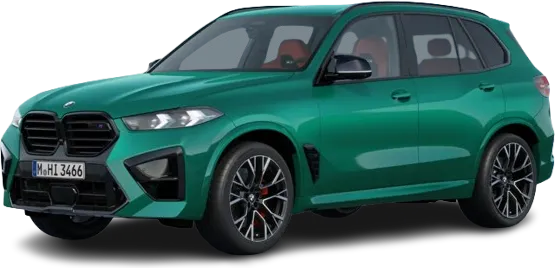
Displacement: 2,998 cc (40i/50e)
The 2026 BMW X5 utilizes the B58 3.0-liter TwinPower Turbo inline-six engine across its primary trims. In the xDrive40i, it is paired with a 48V mild-hybrid system for efficiency. The xDrive50e PHEV variant utilizes the same displacement but integrates a far more powerful 145 kW electric motor within the transmission housing, paired with a 25.7 kWh battery pack.
Max Power: 375 hp (40i) / 483 hp (50e)
The standard xDrive40i produces a refined 375 hp. For those seeking electrified performance, the xDrive50e jumps to a combined system output of 483 hp. The performance flagship, the X5 M60i, utilizes a 4.4L V8 ($4,395$ cc) to deliver 523 hp, while the X5 M Competition peaks at 617 hp.
Max Torque: 520 Nm (40i) / 700 Nm (50e)
The 40i variant offers a stout 520 Nm, while the 50e PHEV leverages its electric motor to provide a massive 700 Nm of combined torque. This instant electric torque allows the 50e to pull with the authority of a V8 while maintaining the smoothness of an inline-six.
0-100 km/h: 4.8s (50e) / 5.4s (40i)
Acceleration is blisteringly quick for a vehicle weighing over 2.2 tons. The xDrive50e hits 100 km/h in just 4.8 seconds, marginally trailing the V8 M60i (4.3s). The standard xDrive40i remains highly competitive, completing the sprint in 5.4 seconds.
Top Speed: 250 km/h
Most X5 models are electronically limited to 210 km/h (130 mph) with all-season tires, but can be raised to 250 km/h (155 mph) with the optional performance tire package. The i50e can drive on pure electric power at speeds up to 140 km/h.