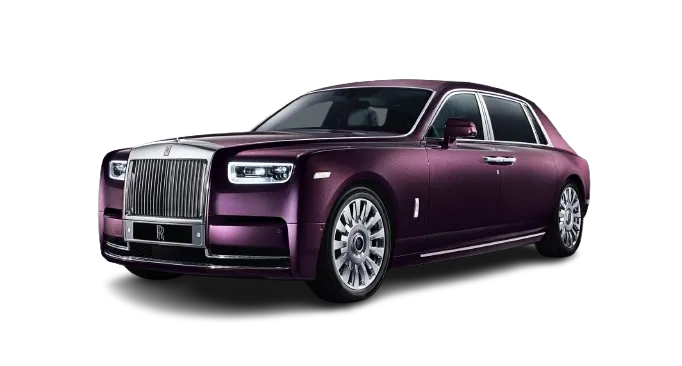
Engine Displacement: 6,749 cc (6.75L)
The Phantom utilizes the iconic 6.75-liter V12 engine, a displacement figure steeped in Rolls-Royce heritage. Unlike high-revving sports engines, this power plant is engineered for "waftability." It features a twin-turbocharged configuration that allows the vehicle to produce massive power at very low revolutions. For the 2026 landscape, this engine remains a masterpiece of thermal management, utilizing a complex cooling jacket system to ensure that the massive V12 block operates silently, with almost zero vibration felt through the chassis or steering column.
Max Power: 563 bhp / 571 PS @ 5,000 rpm
Generating 563 brake horsepower, the Phantom’s power delivery is described by engineers as "adequate"—a historical nod to its effortless nature. The power is managed by a sophisticated engine mapping system that prevents sudden surges, ensuring that even under full throttle, the transition of speed is smooth and "linear." This is critical for rear-seat passengers who may be working or resting, as the car accelerates with a sense of gravity rather than mechanical strain.
Max Torque: 900 Nm @ 1,700 rpm
The defining characteristic of the Phantom is its 900 Nm of torque, which peaks at an incredibly low 1,700 rpm. This provides the "limitless" feeling of acceleration from a standstill. For a vehicle weighing nearly 2.6 tonnes, this torque allows it to move with the agility of a much lighter car. The engine is tuned specifically so that the driver rarely needs to exceed 2,500 rpm in daily driving, keeping the cabin environment whisper-quiet.
No. of Cylinders: 12 (V12)
The V12 configuration is chosen for its inherent primary and secondary balance. By arranging two banks of six cylinders at a 60-degree angle, Rolls-Royce eliminates the need for heavy balance shafts. This results in an engine so smooth that a coin can famously be balanced on its edge on top of the running engine block without falling. In the luxury segment, the V12 remains the ultimate status symbol of mechanical refinement.
Valve Train: DOHC with Variable Valve Management
The Double Overhead Camshaft (DOHC) system is paired with BMW-sourced Valvetronic and Double-VANOS technology. This allows the engine to "breathe" with extreme precision, adjusting valve lift and timing instantaneously. This technology is key to achieving the Phantom's Euro 6d emission compliance despite its massive displacement, as it optimizes fuel-air mixtures for every individual combustion stroke.
Fuel System: GDI (Gasoline Direct Injection)
The Phantom uses a high-pressure Gasoline Direct Injection system. Fuel is sprayed directly into the combustion chamber at pressures exceeding 200 bar. This creates a finer mist for better combustion efficiency and cooling of the intake charge, which allows for a higher compression ratio even with turbocharging. This system is instrumental in providing the "instant" throttle response required for the vehicle's "waft" characteristic.
0-100 km/h Time: 5.3 Seconds
Despite its size and focus on luxury, the Phantom can reach 100 km/h in just 5.3 seconds (5.4 seconds for the Extended Wheelbase). This performance is achieved not through aggressive gear shifts, but through a relentless surge of torque. The acceleration is so smooth that passengers often don't realize the speed until they look at the digital speedometer.
Top Speed: 250 km/h (Electronically Limited)
The Phantom is electronically governed to 250 km/h. While the car is capable of higher speeds, Rolls-Royce limits it to ensure the tires and air suspension components maintain their "Magic Carpet Ride" quality and safety margins. At its top speed, the Phantom remains incredibly stable due to its advanced aerodynamics and active rear-axle steering.